Saturday, October 12, 2013

"Wicked" vs "Oz the Great and Powerful" (and more prequel talk)

Hello friends. Now, some of you might remember that a while ago I reviewed "Monsters University" and had a big ol' rant on prequels and why they usually do not work. Well, shortly after I saw MU, I saw "Oz the Great and Powerful", the latest story set in everyone's favourite public domain fantasy world, Oz. I've been wanting to review it for a while now but quickly realised that it maybe wasn't the best suited for review, for two reasons. Firstly, I didn't find it offensive or particularly childhood desecrate-y because I had no (positive) expectations for it, so I couldn't take that angle. Secondly, I'd already read and watched reviews of it saying most of the things I would have said, including the feminist angle because it's more intellectual that picking holes in a movie that is clearly flawed (See that one here, It's pretty awesome) so I  figured, eh, I'll leave this super easy target alone.

However, about a week ago I found the file for "Wicked"'s soundtrack (I'd had it on my laptop but then iTunes lost it and I couldn't find it but it reappeared inexplicably and I was like "holy crap, yay!") and I began to listen to it. Small details you should know: When I originally had the soundtrack on my iPod I hadn't seen the musical or read the book. After I'd lost it, I went and did both those things. I was listening to the soundtrack with newly educated ears. And it was then that I realised (or remembered) how very, very clever Wicked is, both as a story, an adaptation and as a prequel. You see where this is going, right? Of course you do, It's in the freakin' title.
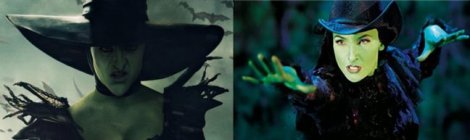
FACE OFF TIIIIIME! 
That's right, I'ma do a comparison. I'd just like to get out of the way quickly that I did give this movie a chance, I'm not one of those people who will slam something just for trying to expand a universe or story. I'll slam it for doing so terribly. I genuinely hate people going on about how the new Charlie and the Chocolate Factory or the new Pokemon generations will never be as good as the originals. Grow up, guys. You can leave a little space in your heart for your childhood memories but if you truly love the universe you'll at least give it a chance before starting a hate group.

That said, this movie is BAD. As a stand-alone story it sucks, the characters and their motivations are flimsy as hell and the entire thing somehow feels simultaneously rushed and far too long. It's a mess. But any reviewer can tell you that. I'm going to look at Wicked because it is basically the same thing done right.

But first (Oh geez, get to the point already! I will, this is the last one. Promise) A little bit of clarification and background. For the sake of ease, I'm going to be comparing "Wicked" (the Musical) to the film "Oz the Great and Powerful", using the 1930's film "The Wizard of Oz" as a fixed reference point. I've made this decision because these are the most well known versions of the texts. The musical "Wicked" is based on the book "Wicked: The Life and Times of the Wicked Witch of the West" by Gregory Maguire but, having read the book, they are quite different and, again, the musical is better known. I'll be comparing the two to the 1930's film in part as well, partly because it's better known than L. Frank Baum's book (which I have yet to read) and also because the screenplay for "OtGaP" is based on the movie, not the book. Phew, now that's out of the way, TO THE REVIEW! (This review will contain spoilers for the musical and both movies)

Now, I'm not sure if you know this, but I like to write things (That's a joke, I never freakin shut up about writing). I would like to write as a profession, if anyone will have me. This is mostly because I like stories and always have (probably always will). So, dear readers, it frustrates me somewhat to see people who have much more experience and expertise than I making rookie mistakes when it comes to storytelling. I will acknowledge that prequels are difficult to do well. I've already spoken on this but, again, as someone who may or may not currently be writing a novel that is somewhat prequel-esque, I care about this in particular. I know that it's a struggle but that's why you need to put extra effort in. So, speaking of effort, lets take a look at OtGaP in terms of prequels and general storytelling.

It's probably already obvious to you that this movie didn't do this very well. However, allow me to elaborate. In OtGaP, we follow Oscar AKA Oz (played by James Franco) as he is transported to Oz where he finds out that there's some prophecy saying a great and powerful wizard will come and save the day or something. Along the way, we meet Theodora (played by Mila Kunis and our not-green Elphaba/Wicked Witch equivalent), Evanora (played by Rachel Weisz and the Nessa/Wicked Witch of the East equivalent, though it's not really made clear) and Glinda (played by Michelle Williams). The story in a nutshell: There's a whole big kerfuffle over who's good and who's evil despite the fact that it's pretty damn obvious, there's a Zach Braff monkey and a talking china doll for some reason, Oscar is a jackass and tries it on with all three witches, Mila Kunis eats and apple that makes her green and evil because Oscar fucked her then didn't commit, there's a war, Oscar's a floating head and the bad witches run screaming into the night. The End.

Can you see what I'm getting at when I say it's a bit of a mess? Here's a trailer to help you visualise things.


Where to begin. Most of the problems with the plot of the movie lie with where it tries to create stakes. It tries to create stakes by saying that Glinda is a bad witch, which fails because anyone familiar with the 1930's movie (ie. everyone in the movie watching universe) knows that she's not. It tries to create stakes in the battle between the witches and the good guys, when everyone knows that the wizard must gain control of the city by the beginning of the original timeline, as well as knowing that both the bad witches must survive this one, as they're alive when Dorothy shows up. They try to create romantic stakes but there's no build up so we don't care, as well as that fact that the wizard from the original is pretty decidedly romantically uninvolved (and, not to sound mean, but for clear reasons). They try to create drama with Theodora's apple eating antics but the motivation behind it is so flimsy and has such a lack of build up that it is effectively impossibly to care. There are no stakes, as is the case with most prequels.

"But Rachel," I hear you say, "How can they have a prequel without dulling the stakes a little? Surely the audience can suspend the part of their brain that knows the original in order to enjoy this work. Your expectations are far too high for them to be practical."

I'm so glad you said that, hypothetical reader. It CAN be done! And we have a prime example of this in "Wicked". Instead of shying away from the blatant fact that people are familiar with the original story, Wicked uses it to its advantage. Throughout the entirety of the play, there are little references to the original story and to things that will happen in the musical itself. Relistening to the soundtrack, all the references are increasingly noticeable, it's essentially "foreshadowing and dramatic irony the musical" and it works so very well. For example, in one of Elphaba's early scenes she claims to have had a vision that "...someday there'll be a celebration throughout Oz that's all to do with [her]". This little reference to the whole "Ding dong the witch is dead" idea from the original (as well as the musical beginning with the news of her death, benefiting unfamiliar viewers) is simultaneously funny and intriguing to the audience. The fact that we know Elphaba will one day be known as a Wicked Witch piques our interest because she seems so reasonable at the beginning. We want to know how the original story comes to be and that keeps us invested. That, and the fact that the characters are interesting and well developed.

Speaking of, let's compare the two Wicked Witches of the West(s?). Elphaba, Wicked's WWW has been green all her life, for reasons unexplained (in the musical anyway, though Maguire's reason it is hinted at in the first scene. For those of you who want to know: Elphaba is the wizard's daughter, born of a one night affair between the wizard and her mother (this is depicted at the beginning of the musical). The potion he gave Elphaba's mother on the night of her conception caused some kind of anomaly, making her green and the fact that she is of both the regular world and Oz is the reason for her magical powers.)

Elphaba has been shunned and reviled her whole life for being different and has become introverted and cautious because of it. She has to mind her wheelchair-bound sister Nessarose and desperately seeks the approval of her father, who treats her like a disappointment. When she discovers that she has some natural magical powers, she begins to dream about one day working with the wizard and being respected by the people of Oz who previously despised her. All this is shown to us within the first fifteen minutes of meeting Elphaba.

In contrast, the first fifteen minutes of meeting Theodora consist of:
1. She serves as exposition for Oscar about a (generally badly explained and inconsequential) prophecy doohicky
2. We find out she's a witch (though not much about what this means).
3. She and Oscar get chased by a flying baboon, dance, presumably screw (I must assume, given the framing) and then they go off to the Emerald City.
4. On the journey, she is full of talk about how he'll be king and she his queen (and he feels uneasy at her pressure to commit)

There is a serious difference here between the two characters, in the worst possible way. Like, the difference between a well developed, useful character and a two dimensional plot convenience. Which, don't get me wrong, is fine. Sometimes characters can't be fully fleshed out because there simply isn't time. And as a writer, I understand that you need to inform your audience of the world laws somehow, "exposition fairies" can be a good method of doing so in a more or less natural way. However, this is THE Wicked Witch of the West, whether the audience knows it yet or not. She is the primary antagonist of the traditional Wizard of Oz story, surely she deserves more character than "naive with no reason to be, exposition spouting, instant love interest girl".

Let us compare. Both Elphaba and Theodora are framed as sheltered; naive and idealistic in their own way. Elphaba is this way because she has never truly fit in, so some social customs are odd to her. However, she is still intelligent. She reads and looks after her sister, so she is not unfamiliar with people and how they operate. She is somewhat naive in her faith in the wizard, but no more so than the other citizens of Oz. And if your life had been as crappy as Elphaba's up til that point you would probably have some kind of underlying hope that one day you'd be accepted and appreciated by your cold shouldered peers and father. This help to make Elphaba a realistic character and one that we can relate to.

She seems to have more hat than character.
Stupid bad screenwriting. There's
this crazy concept called "build up and payoff".
Here? Whole lotta nuthin'.
Theodora also seems to have been sheltered (and much of this extrapolation is perhaps giving the film too much credit, but I'll do what I can). She and her sister, Evanora, do not seem to have any living parents, so it can be assumed that they are dead or... gone off somewhere, I guess. Probably dead, knowing these stories. Anyway, judging by the level of trust Theodora has in her older sister (but somehow very little knowledge of her actions and everyday doings... sorry, sorry, must not pick holes. Focus on the bigger holes- the characters. Bad-um tss!) Theodora has been raised by her sister; and her sister, being the wicked one (a label which is thrown meaninglessly around waaay too much, by the way) has kept her in the dark about the true goings on in Oz and filling her head with lies. Honestly, though, Theodora's behaviour does not at all add up. The levels of stupid and generally unaware that she displays at times, in comparison to her competence and intelligence in other scenes? Does not compute! She seems more like a child than a grown-ass woman and her sheltered-ness cannot be wholly blamed. Then, halfway through the movie, it decides they need to (to use Wicked's term) "greenify" her. This is the total character turnaround that was not in any way being built up to (I mean that in all honestly, it's totally out of left field). Evanora gives her a green apple that will make her evil... or something. It's really stupid. She eats it because it will apparently make the pain of a dude she's known for less than 24 hours not wanting to marry her, go away. I swear, she did at one point seem like a normal, rational thinking human. Blink and you might've missed it, but it was definitely there. So yeah, Theodora goes Anakin because she sees Oz trying it on with Glinda (who is very clearly not evil) and her tears burn her (why? This is not a plot point. Never is the water thing mentioned, ever) and she wants the pain to stop. So you obviously trust the sister offering you the biblical reference and telling you how your hear will shrivel up. I also love how they try to do the "tree of knowledge thing" because the moment she takes a bite Theodora's all "Wait a second, you're the evil one!". Like, dude! Was that not obvious? Like, at all? After that though, all her anger at her sister (you know, the one who's been lying to you pretty much your whole life?) is forgotten and that rage is aimed at the MAN. She's instantly the Wicked Witch from the 1930's film. Just like that, boom, total 180 degree character turn around.

Now, because I said I was being fair I will do some more comparison. One might argue that the original wicked witch was not particularly well developed in terms of motivation or her reason for being evil either. Honestly, I have to disagree. Part of the reason she's perhaps under-explored in terms of character, is because the film follows Dorothy, who knows very little about the witch and doesn't exactly have an opportunity to get to know her. Also, at the time it wasn't  hugely common to show moral ambiguity in films, especially those aimed at younger audiences (which is still mostly true today). Villains were painted as irredeemable and thoroughly evil because it was easier for the heroes to kill them that way. And death is the easiest way to remove a threat. Killing a morally ambiguous character is questionable but if that character is truly, drowning puppies evil then it's perfectly okay. All this is aside from the notion that the entire thing might be a figment of Dorothy's imagination and the witch is based on her mean neighbour, who she also doesn't know much about (other than the puppy stealing)
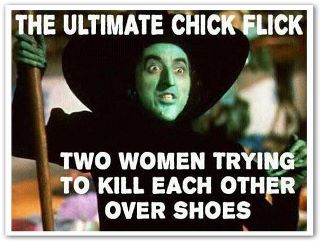
There's still the motivation qualm but that's easier still to understand. You've just had a sister brutally crushed by a house and the bitch who dropped it is struttin' around in your dead sister's shoes. Not only are they now presumably your property (again, no apparent parents or relatives to mention) but this bitch has insulted your sister's memory by taking them. There's some sentimental value there. Don't tell me you wouldn't be pissed.

Compare this (anger at theft, manslaughter and added insult to memory of a loved one) to Theodora's primary motive (he doesn't like me like that) and we have a little bit of disconnect. Yeah, you might be a wee bit annoyed if the dude you slept with (I assume) hightailed it but c'mon now woman, selling your soul is a little extreme, don't you think? To complete the witch trio, Elphaba's motives are much similar to those of the 1930's witch- those shoes have a sentimental value to her and she'd rather not have them flaunted like a trophy. On top of that, she's been falsely labeled as a terrorist for her activism against animal cruelty and against the oppressive regime the wizard has in place. No, really. It's actually pretty fucking awesome.

Speaking of, let's talk about the protagonist of "Oz the Great and Powerful", Oz himself. Believe me, I'd much rather ignore the man behind the curtain, but in this rare case he's the protagonist, so I guess I have to take a look at him. But first, here's what I knew about the wizard going into OtGaP: In The Wizard of Oz he was a bumbling magician, scared out of his wits by the wicked witch of the west (quite possibly because she can see he's not really a wizard) and tricking people into adoring him and pretending to help with their problems (dude, da fuq is a lion gonna do with a diploma?). In Wicked, he's a very similar character, only slightly more cunning politically with his spin doctor Madame Morrible at his side. This wizard is somewhat of an idealist but he's not about to stand for threats to his power (such as a real wizard or witch) and he knows he can use people's fears to his advantage. I'm going to break my own rule briefly to discuss the wizard in the book version of wicked. That guy is a shrewd and cruel dictator, crushing any opposition with his secret police the Gale Force and Madame Morrible, serving a pseudo-Goebbels/Himmler figure. He's the real villain, but at least the book recognises that.

This wizard is, in this work, possibly the worst. Not solely because of his deeds but because of his framing.
Indeed
Oscar (because they felt the need to name him Oz, possibly in some strange tie in to the dream theory, despite the fact that he never leaves Oz in the film so it makes no sense) is a conman and a charlatan in a travelling fair, tricking random girls into being his assistants and presumably sleeping with them before moving on. He mistreats his assistant and is a general prick to everyone until the universe decides "Y'know what, asshole, have a tornado sandwich" and drops him in Oz...where everyone adores him and trusts him and he gets a happy ending despite still being the same terrible person by the end. Dammit tornado, why'd you have to drop him in the ONE place with a prophecy about a dude called Oz saving them all? That's just bad planning, tornado, shame on you.

Whilst I have my problems with Theodora's "arc" in this movie, Oz's is so much worse, because IT'S NONEXISTENT! There is a HUGE amount of set up for him to change his ways, showing how he's a misogynist, a compulsive liar, manipulative, borderline abusive, unappreciative... then it has him use all these things to save the day! I'm not even joking, Glinda actually tells him to keep lying when she realises he's not an real wizard and she's meant to be the voice of reason! And while usually I hate the "liar revealed to create drama" plot device, this doesn't even have that comeuppance because the 1930's film dictates that the Ozians have to think he's a wizard. I cannot understand the baffling moral standpoint this film takes. When compared with the sweeping moral and social commentary of its rivaling prequel, which questions the nature of good and evil, explores the idea of standing up for what you believe in despite persecution, shows us the willingness of people to create black and white villains and heroes for the sake of ease... compared to that "lying is okay for the right reasons" looks puny and incredibly misguided, especially when the "right reasons" include getting a room full of gold to roll around in like Scrooge MacDuck.

♪ We're off to see the Aslan, the wonderful
Christ allegory of Narnia! ♪
Come to think of it, it should be obvious why no one had thought to make a movie centred on Oz before: Because Oz is not a hero. Hell, in the original movie he's shown as fairly pathetic, a trembling coward who sends little girls to do his dirty work for him and has to cheat and deceive the citizens of Oz for his own selfish gain. He's not a morally strong character, and there's no way you can make him one in a prequel because he'd have to revert somehow at the end. There's also a bit of disconnect in the timeline because for some reason Hollywood decided to get a young, attractive actor to play the bumbling , pathetic wizard. Hmm, I wonder why. There seemed to be a huge contrast in the timelines as well. At the beginning of this film, Oscar is in a travelling circus in the year 1905. This is where things get timeline crossover-y. While the original film was made in 1939, L Frank Baum's book was first published in 1900, set in that time, roundabouts. So, according to the book and therefore the canon (as the movie doesn't state) Dorothy left Kansas before Oz? Or, giving a little leeway, even if the wizard arrived in Oz a few years before her, he'd need to age at five times the normal speed to get to the age he was in the original texts! What, is Oz like Narnia? You age while your there but no real world time passes? This was never mentioned! Also, if some twenty years had passed, why had no progress been made? Surely people wouldn't put up with all the terrorism from the witches for that long. At the end of  OtGaP it wasn't like they made a truce or anything, Theodora was still pretty damn pissed. Ugh, my guess is they completely ignored the old man aspect present in the other versions so they could have the sex appeal and write in the crappy romance plotline. The fact that in Wicked he's Elphaba's oblivious father then here he and Theodora screw? Just... *shudder*. Bad feelings, man. Not cool.

There're also references to the end of the 1930's film by having characters from the start of the film voice or play other characters. Glinda is played by the same woman as the "not-love-interest" in the real world and the put-upon assistant is played by Zack Braff who later voices the put-upon flying monkey assistant. However, this makes no sense as there's no pay-off. Oz doesn't return to Kansas so there is no scene explaining this with a dream and an "and you were there, and you, and you." I guess I'm nit-picking a little here but it just felt pointless, like they wasted time here where they could've been making the dialogue sound like things real people would say. Oh yeah, let's talk about the script. It's suuuuuper melodramatic. Nothing sounds like something from a normal conversation. I understand that it's a magical world and everything, and some explanation is needed but even the conversations between two sisters feel incredibly forced. You just can't remove yourself from the idea that they're actors reciting a script at each other.

Then there are the messages trying to be put forward. Both Wicked and OtGaP mention the term "Wicked" and "Good" a lot. The musical uses this well, to highlight the idea that both are subjective and not necessarily part of who you are but equal parts the choices you make and the way people see you for them. It strays from the black and white and asks the question "What is wicked?". It shows the hypocrisy in people who want the worst for those they see as wicked or wrong. Two songs that highlight this in particular are "No Good Deed" and "Thank Goodness"sung by Elphaba and Glinda (with the chorus) respectively. No Good Deed talks about how Elphaba is persecuted no matter what she does so she decided to do what she believes in and throw all regard to the wind. Thank goodness is Glinda talking about how well everything is going for her and how being "good" will always result in happiness, all the while not sure she believes what she is saying. Both are well thought out songs and interesting points to make, especially considering that they don't answer the questions posed (well, not definitively). Is it better to be seen as that bad guy for doing what you believe in? Or better to betray your beliefs to follow the rules and succeed? Oz the Great and Powerful, on the other hand, throws the words "Wicked" and "Good" around like simply using the words is clever. Pose deep and thought-provoking questions?
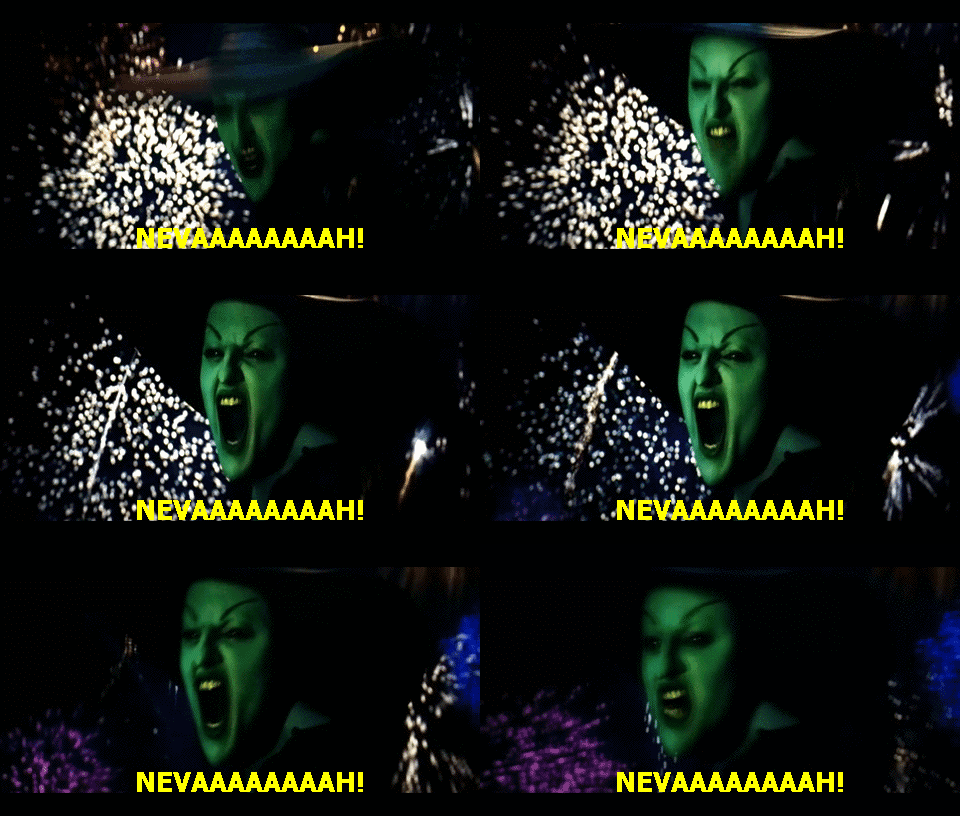

Even in Theodora's introduction, she refers to herself as "Theodora the good" like that means something. Then she and Evanora talk about being wicked and how Theodora is susceptible to wickedness, ignoring completely what the idea of wickedness entails. I suppose I shouldn't expect intelligent commentary from a movie that goes "Oh, you're evil now" to one of their main characters and never questions it. *Sigh* 

Finally, I'll talk briefly about the side characters (then you can all go home, yaaay!) In OtGaP,they introduced other characters which actually worked quite well. There's a little China girl (as in made of porcelain, I'm not  just being racist) and the aforementioned Zach Braff flying monkey. These characters are decent additions if not merely vessels for showing Oz's "growth". The China girl serves as someone for Oz to use to look good in front of Glinda and the Braff monkey is bullied by Oz throughout. There's also a scene near the beginning where a lion attacks the Braff monkey and Oz scares it away with a cheap magic trick, yelling "coward!" at it for running away. That's it. That is our only lazy link to three of the most memorable characters from the original movie. Really movie? Really? 

In contrast, Wicked also features the lion, plus the Tin-man and the Scarecrow. SPOILERS ahead. Wicked cleverly integrates these three into the story about animal rights and the nature of good and evil. The lion is introduced in a classroom where Dr. Dillamond (a teacher who's also a goat, slowly losing the power of speech thanks to the wizard's oppression) is teaching. The lion has been rescued from the wild because he was injured and probably wouldn't survive. Elphaba and Fiyero (Glinda's (and later Elphaba's) love interest) set the cub free when his leg has healed. Later in the musical, during the song "march of the witch-hunters", the Tin-man speculates that if Elphaba had let the lion fight his own battles when he was young, he wouldn't have grown up to be a coward. This works very well as a wink to those familiar with the source material (as well as bringing up an interesting moral argument about animals being released back into the wild), and doesn't feel shoehorned in like OtGaP's version. The Tin-man in Wicked, not mentioned at all in OtGaP, is the way he is after literally losing his heart when Nessarose (the "wicked witch of the east") miscast a spell to make him stay with her. Elphaba cast another spell, turning him to tin so that he would not die, but he misunderstands and resents this, causing him to chase down the witch later in the play. 

Finally, the Scarecrow. I'm going to use this as an example of how one can make a prequel work. Fiyero, a Winkie prince, is introduced early in the play as the dashing but somewhat ditsy near instant love interest for Glinda. He sings a song about "dancing through life" with lines like "life's painless, for the brainless" and "why thing too hard, when it's so soothing dancing through life". The character is likable but shallow. However, as we get to know him better (as does Elphaba) we learn that there is more beneath the surface, and puts on the shallow act because it's what's expected of a handsome prince like him. He has a kind heart and strong moral convictions, much like Elphaba. As the play progresses, Elphaba shunned, he and Glinda married, the two old friends (Elphaba and Fiyero, that is) run into each other and have a brief affair, as Fiyero realises that keeping up appearances isn't worth denying his true connection with Elphaba. They sing the song "As long as you're mine" featuring a line "maybe I'm brainless, maybe I'm wise" from Fiyero. Shortly after, they're discovered by Oz's soldiers and Fiyero captured and beaten. Elphaba frantically casts the first spell she finds, to prevent harm coming to him, saying "may his bones never break... may he feel no pain... let him never die". 

And he becomes the Straw-man.

He then works with Elphaba to make the people of Oz believe she is dead, be spreading rumours that water can melt her, and making sure that Dorothy makes that her weapon of choice. Ok, the story doesn't fit perfectly but holy shit is it a good way of making a prequel interesting. When he's introduced, we assume he's a disposable love interest, because he's not in the original. We miss all the signs because we're not looking for them and then... it all comes rushing back with that final twist. Like I said, "Foreshadowing: the musical". THIS is what prequels should strive to do. Take advantage of the fact that we've seen the original, play with those expectations instead of trying to push them away. They could have done this with OtGaP, making Theodora normal looking at the start was a decent start. But it's all in the delivery, and that's where Oz the Great and Powerful utterly fails. 

I think I'ma finish up here, this review has gone on waaay longer than I thought it would. 

Well done if you got this far, now take us home!
Embrace the Madness

Saturday, October 05, 2013

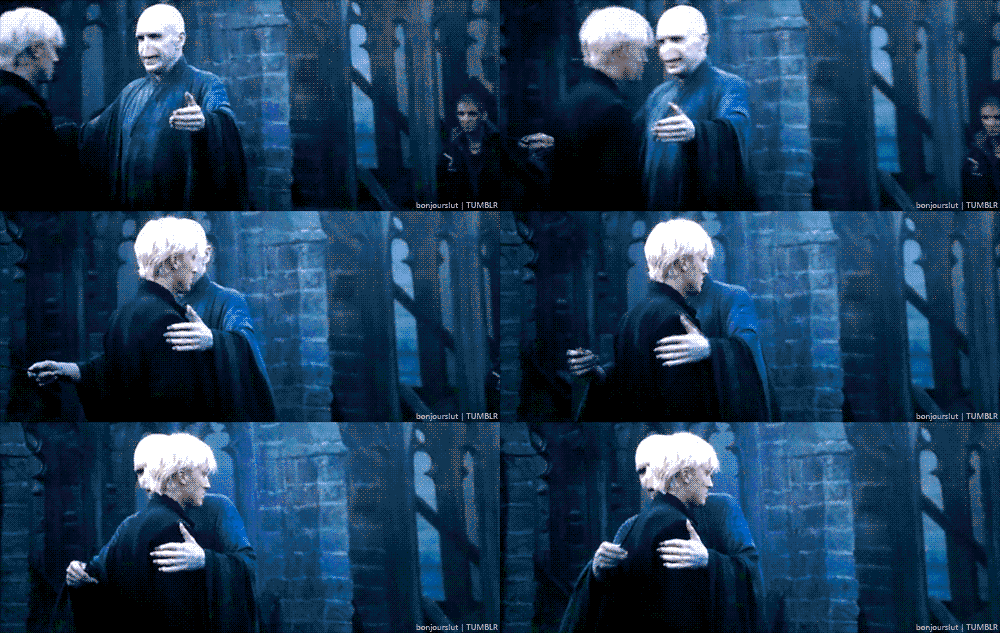
Things that irk me: That goddamn time-turner

Hello friends! Today I am beginning a new segment (can I call it that? I'm gonna call it that) called "Things that irk me". I'm uncertain as to how many entries this segment will have, but considering that a good few of my blog entries have already been about things that irk me, I think I can sustain it fairly well. Many things tend to irk me, as I'm sure you've probably gathered by now. People irk me, people not thinking irks me, people not thinking I think they are irksome irks me. Irksome things. The word irk, on the other hand, does not irk me.I like the word irk. It's three fifths of the word quirk, and we all know how I feel about that word.

I'd like to begin this segment with a little fan-girl peeve (yes, that's a reference to where this is going, sorta) regarding one of my favourite things, the Harry Potter universe. I don't say Harry Potter (though he is awesome) because it's more an issue that is taken up with universe logic and not the book series so much, though I suppose I'm being a little pedantic as they're essentially the same thing.

That. Damn. Time-turner. (Below is one of the main time-turner related arguments, in some context. I actually love these How it Should Have Ended videos but I accept that they simplify elements of the plot for the sake of humour. That's often what parody does and I can forgive them that, because a lot of their videos are clever, well constructed and their points valid.)


It's one of those things that people who generally aren't fans use as an example as to why an otherwise incredibly nuanced and well thought out world is "stupid" or can be entirely disregarded based on one small inconsistency. It's next to "Why didn't they just drop the ring into Mt. Doom on the eagles?" LotR nitpick, and the "Why didn't they just blame the joker?" concern with the end of The Dark Knight. I don't really know enough about either of the others to comment but the reasons I can come up with are along the lines of "For the purposes of drama and good storytelling" or "To show certain character development points".

Again, these two don't annoy me as much because I'm not as informed but also because they are valid points (at least, I don't see fault in them as criticisms and I've never had anyone convince me otherwise). I take issue with the time-turner-ists because the hypothetical scenarios they put forward as solutions, in which the time-turner is used to save the day ARE FUNDAMENTALLY WRONG. I base this entirely on world logic and the impressions and explanations we are given in the books (ie. the canon), specifically book 3, The Prisoner of Azkaban.
Man, I love that design though
Mmmmm....(drooling ever so slightly)
The main reason I take issue with this criticism of the books that I so love is twofold.

1. The people who put forward such an argument clearly weren't paying attention to the time-travel mechanics, how the scenario unfolds is really all the explanation needed. But more on that later.

2. It kind of hits a nerve.

It hits a nerve because it makes me acknowledge the fact that a fair bit of the world logic is flawed. Harry Potter and the Prisoner of Azkaban is quite possibly my favourite of the seven books.... but it has a bit of a deus ex machina ending. I love the book, I honestly do. I love the characters introduced and the development given to those already existing, I love the back story elements of it, I like the fact that we get a break from the Voldy antics (it is the only book not to feature Voldemort at all) and the plot as a whole feels like the best stand-alone story out of the lot. It is cohesive, it's dark, funny, inventive, with an emotional maturity we hadn't seen a whole lot of in the previous two books. Harry has the greatest arc so far in this book and we see him grow so much from it, it's incredibly satisfying. But it's not without its flaws. The ending, while clever (and not flawed in logic) does feel like Rowling had to finish her story and threw something in last minute, backtracking to make it work.

And the others aren't perfect either. Honestly, I don't know why more people don't question the logic of the sentient paintings, or the goddamn luck in a bottle! I could probably write whole rants on those two separately (Do the pictures think the same as the people themselves or are they independent? If the former is true, could you glean information about someone by creating a magical picture of them and interrogating that? Does the picture know what happens to their flesh and blood counterpart in real time? And the felix felicis- if it's notoriously difficult to make, why don't potion makers make a small portion of it then make more under its influence, as they wouldn't fail? Anyway, another time, readers). Accepting the flaws in something that is otherwise so well constructed can be difficult but from a writing standpoint it is somewhat comforting to know that works that I and many others love, can be flawed in such ways and still be so loved.

Anyway, on to why the time-turner-ists are wrong. For this to make sense, let me first summarise what happened at the end of the third book. Buckbeak, a hippogriff (a mythical winged horse with an eagle's head and neck) belonging to Hagrid, is to be put to death for attacking Draco Malfoy near the beginning of the book. Harry, Ron and Hermione go to watch the execution. However, as the dded is being carried out, Ron's rat Scabbers runs away and the three chase it, never actually seeing the execution. Then, later, Harry, Ron and Hermione are being drained by some dementors and are saved by someone in the woods with the patronus of a stag, whom Harry originally believes to be his dead father somehow come back to life. The three of them then pass out. Back at the school, they discover that Sirius Black, Harry's godfather who was framed and wrongly convicted of murder, has been sentenced to a dementors kiss which will reduce him to a mere shell of a man. Harry and Hermione, having learned the truth, decide they cannot let this happen and are advised by Dumbledore to use the time-turner to change things. They go back in time, save Buckbeak (who was never actually executed, as he was rescued before the executioner could act), rescue their past selves from the dementors (Harry finding that it is his own patronus that takes the form of a stag) and using Buckbeak to save Sirius from where he's being held, returning to the same spot before time catches up with them.

This is quite a different kind of time travel than the kind we are used to. Why? Because it does not actually change anything. Everything is exactly as it was when they two went back in time, the only thing that has changed is knowledge. Harry didn't know that Buckbeak was saved and so it was possible to save him. The three friends didn't know that it was Harry who saved them so it was possible for him to do so. And Harry and Hermione didn't know that they'd already helped Sirius escape, so, again, they were able to do so. This form of time travel is such that no time paradoxes are created and no fixed points in time are altered, there being no "Well, if that never happened then why would I go back in time in the first place?"

It's a little bit complicated, so I'll put it in simpler terms (analogy lovingly taken from Charlie McDonnell here). Imagine you walk into your kitchen and find a freshly baked plate of cookies. You eat them and they're really good, so you decide to make a second batch. When those cookies are baked and put on a plate, you notice that that plate of cookies is identical to that which you just polished off, so you go back in time and leave the cookies for past you to find and enjoy. No paradoxes, no mess. Easy.

Here's a second simplified explanation of the three
agreed upon time travel methods
Or so it would seem. However, people tend to ignore these time travel rules and apply the usual default (the paradox causing rules) where things can change and paradoxes can be caused. Because the time travel in the Harry Potter universe is not as useful as the paradox causing kind, even though it makes more logical sense. The only thing that can change in the Harry Potter universe's version is knowledge, specifically that of the user. That's why Hermione was able to use it to take so many classes, the only thing that was changing was her knowledge. However, while that usage is quite simple in terms of consequences (as long as the two Hermiones are never in the same place) it gets more difficult once you do change things. This is where some of the logic breaks down and becomes philosophical. If you were to travel back in time, whatever you do would already have happened during the space in which you were living in your regular timeline. So, when you are back in time, is your free will truly your own? Everything you do has been, in a sense, predetermined, because the timeline is fixed. So...you don't have free will. Therefore, whether or not you can change anything is based entirely on the fixed timeline. This is somewhat discouraging in terms of time travel use because whether o not you change things in your favour relies on whether or not it was "meant to be". This does fit with the fatalistic world of Harry Potter, though, where prophecies can be made and they will fulfill themselves. Then there are other questions that can be asked about this time travel conundrum. For example, one could argue that it you killed someone while back in time, you couldn't be held accountable because your actions were pre-decided by the fixed timeline. Hey, I'm not saying the world's logic is infallible. There's a jelly legs jinx for chrissakes!

I had to include this somewhere.
Context is for the weak! 
I am, however, saying that one could not go back in time and kill Tom Riddle, thereby stopping any of the events of the war, Harry's Parents' deaths et cetera from ever happening. For such a thing to be possible, given the time travel rules of the world, you would have to go back in time, kill Voldemort or Tom Riddle but then replace him with an identical person who would need to believe they were the person you just killed, and have all his memories and characters traits. And, because you (probably) have no free will, the likely outcome of such an expedition would be:
Go back in time => See young Voldy => Chicken out => Timeline continues as normal => eventually you'll catch up to your own time, decrepit and disillusioned at yourself for being unable to do the impossible.

There are infinite further questions regarding this from of time travel, such as how aging works, and there's the added fact that you can't go forward in time, or, if you could, what that means for the free will argument.

Long story short, people have nothing on my over-thinking these things. Trust me on this one, I've spent far too long philosophising about a world that doesn't exist to have this just shot down. My reasoning is sound, and it all fits. I think I know what I'm talking about here. Come up with your own theories if you like but if I know one thing, it's that there's no way this sort of time-travel could be used to stop our pal Voldy. Sorry guys.

Embrace the Madness (and Draco. Awkwardly)


Saturday, September 28, 2013

Let's be controversial: Religion (Part Two: Religious Choice)

Hello again friends (those of you who haven't been scared away by my heresy, anyway) Today I'm going to be discussing yet another of the things I disagree with about organised religion: the choice aspect. Yaaaay! But, for me to talk about this I'm going to need to disassemble religious thinking and such first. And I'm also going to further cover my ass for what I said last time. (Last time is here, if you missed it.)

I do not hate religious people. Some religious people are pretty cool, in the same way some people who legitimately like Twilight can be cool. I dislike the machine, the organisation behind the beliefs, in the same way I dislike the zealous scariness of the Twilight fan base. And I do question the lack of examination. I ask myself how it happened that a person can accept an idea without question, and will defend them despite lack of critical thought regarding it. Because here's the thing; nothing is exempt from critical thought. Not some book you like, not some belief you have.

Now to the main topic of discussion: Religious Choice. First, let's talk about how religion probably came to be.

So one day some guy goes "Hey guys, wouldn't it be awesome if when you died you went somewhere way nicer than this shitty, hot, sanitation lacking desert we live in right now?" The other guys all nod their heads and go "Yeah, that sounds pretty good." One guy pipes up, "I bet we'd have water and food whenever we wanted." "Yeah," goes another, "and we wouldn't have to worry about anything." "And all our dead friends would be there!" And... and... and... So these guys decide this all sounds pretty great and they figure, well we have no clue what happens when you die, it could be that. And this makes them happy. And because they all think this sounds awesome and they all came up with it, they form a like minded group. And everything is fine. If someone dies, they take solace in the fact that they'll be somewhre nice and safe and they'll be happy there. They have parties for their group once a week because they're friends and eventually other people decide they like the sound of this group and they join up.

But, oh no, one day one of the guys finds out that Mark (one of them was called Mark) slept with his wife and he's all "Bro, not cool, you can't be in our awesome afterlife club if you do that!" And Mark is like, "Really?" and the other dude (his name was probably Alan) goes, "Yup, you have to be nice to people (mostly me) cos there's this guy who rules the afterlife and he won't let you in if you're mean to me- I mean, um, mean to anyone." And Mark is all "Who the heck's this dude all of a sudden?" and Alan's like "Well, you wouldn't know him, he lives in the sky and he told me that we were right about all the afterlife stuff but he doesn't like you cos you slept with my wife and that's totally not cool with him. He said you have to follow rules if you want to get into the afterlife and rule number one is No sleeping with Alan's wife. That's what the guy said, man." So Mark is like, "Ok, dude, if you say so."

That's probably how it happened. Here's Patton Oswald's theory, it's pretty similar:


Basically, that's how religion started out. Every now and then someone would go "Wait a second, how come the sky dude only talks to you, Alan?" And Alan would yell at them for a bit about how he was special and that guy would get kicked out of the group for questioning the sky dude. After a while everyone just accepted that what Alan said was probably right, because after all, it rained that one time after John had said a mean thing about Alan. Then their children were brought up believing what their parents believed, and their children the same, and theirs the same. They were taught not question it because then they'd get kicked out of the group so they didn't. So everyone ends up believing things they only half believe, really. Repeat until the present day, with very minor deviations. 

People tend not to question things they're brought up with. This is present everywhere. I know people who still say they don't like cheese because they tried it when they were five and thought it was icky and haven't questioned it. It's the same reason we don't question the existence of Santa Claus: we want to believe the lie. And the media's everywhere, there are pictures of him all over the place, there are his representatives in public, ringing bells and talking to people who'd probably rather just go home, there are little shrines where you can go and and confess- I mean ask for stuff from the representatives. There wouldn't be this much effort into something that so many people know, be it deep down or in the forefront of their minds, doesn't exist, right? When I was eight years old, I decided to test the myth. I told no one what I wanted for Christmas. I wrote a note and sent it, without the knowledge of my parents. This would be the true test as to whether or not the fat man in the sky- oops, I mean North Pole (y'know, that place you'll probably never go) was in fact, real. But, as Christmas drew nearer and nearer, I began to worry. What if I was right? What if there was no Santa Claus to receive my letter and send that present I so dearly wanted? What if the telling smirk on my mother's face when I'd refused to inform her of my wish list wasn't a bluff? I wasn't ready to risk that much for the sake of truth. I wrote a second Santa letter and left it conspicuously on the kitchen counter where my parents would find it. I did get my present (for the life of me I can't remember what it was) and for the next two years I lived a lie. When I was ten my parents said to me, "Rachel, we know you already know this, but Santa's not real." And I nodded and said "Yeah, I know." "Don't tell your brothers and sisters." "Okay." 

Here's an article about believing in Santa. Substitute some words and ask questions. Please.

I'm really rather proud of past me for questioning and almost taking the ultimate (at the time) risk to discover the truth I wasn't sure I really wanted to know. And that's good. If people didn't question governments were would we be? Or if we didn't question ourselves? Why is it that people willingly accept a man in the sky who supposedly grants wishes late into their lives, when they've stopped believing in magic and monsters under the bed long ago. Part of it is to do with up-bringing, the Santa Claus complex of  "If adults say so, it must be true". But that should wear off, surely? 

When people find out I'm an atheist one of the two most common questions I get asked (next to "Why?". Yeah, question that) is some strain of "Don't you worry about being wrong?" or "Wouldn't you rather have some peace of mind?". Short answer, no. Because 8 year old me learned something from her Santa hunting adventure, that being "Peace of mind is not better when you know you're betraying the critical part of your mind." I was (and like to think I still am) an intelligent kid. And part of me hated having to shut down my reasoning centre for the sake of presents. Hell, that's why I kept up the religion facade for three years longer than I should've: I knew there was a bribe at the end of it. I grinned and bared it to the tune of about 500 bucks and, while feeling ever so slightly dirty, took joy in cheating the system that would bribe kids. 

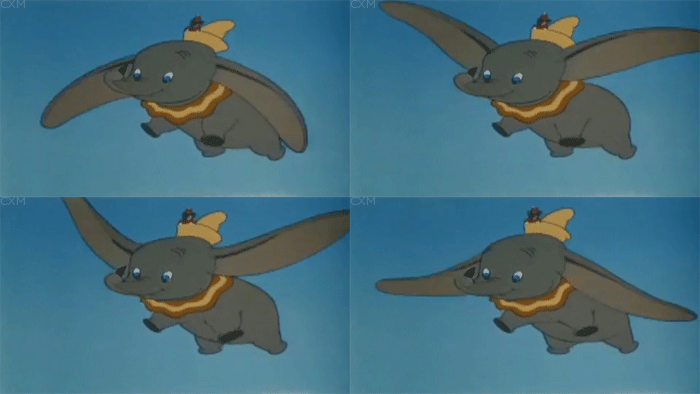
To further answer the peace of mind question, I think it's a little backwards. Yes, I know that many people have relied on their faith when they were in dark places and they are thankful for that. But honestly? I see it as a crutch. If there were some way of proving the non-existence or existence of a god and it turned out there wasn't a god and you'd gotten through a though patch with the help of... positive thinking and your own strength of character, surely this would be encouraging, not discouraging. I see faith (and that's quite a different thing to religion) as Dumbo's magic feather: it might give you the confidence to start off but when you realise it was just you the whole time, that's hella empowering, thrice as empowering as knowing you need to rely on a fickle deity for your successes and achievments. 
Please keep your arms and legs inside the elephant's hat at all times...
what the hell were they smoking over at Disney?
Similarly, I don't put much stock in the "what if you die and go to hell for being an atheist?" thing. I find it a little silly. I'm not insulting you, hypothetical believer, I just think it's silly that the idea that you keep living when you're dead (in any way other than in memory) is so accepted in such as advanced a society as ours. When one dies, the body shuts down completely. "You" cease to be. And, because all we've ever known and all we can know is being, we cannot possibly imagine not being. We learn from experience, therefore we cannot fathom the unexperienceable. Can't do it. So we don't. We invent a soul and say that that is the us that we are so familiar with and that goes somewhere when we die. Personally, I'm not worried about what happens when I die, because I'll be dead. I worry about consequences I'll have to deal with when I'm alive, that worry keeps me busy enough, thanks. 

Now, what was I taking about? Oh, yeah, choice! Basically, my major problem with organised religion is two fold: 1. It encourages people not to think, which is never good. and 2. It ceases to be a choice. I should probably address this one.

When I was younger, my  parents sent me to the local Catholic school. There we were not taught about any religions except for Catholicism. We weren't given other options, so we didn't question what we had. And, of course, at home my Catholic parents didn't talk about other religions, either because they didn't want to interfere with the brainwashing process or (slightly more likely) they didn't know much about other religions. I used to wonder what the difference between Catholicism and Protestantism were. All I knew was what our fairly biased sounding history book told us about the Catholic oppression after the Irish plantations of the 16th Century. They were them and we were us and we didn't question that. Every no and then I'd kinda wish I believed in reincarnation. Phrasing it like that, it's really quite clear where the flaw laid. Reincarnation seemed like fun. I wanted a chance to be a bug or a puppy when I died instead of going to a stupid boring cloud place. And it kinda made sense, because organic matter decomposes and becomes food for plants,which are food for animals, which are food for other animals. The circle of life. It made sense. I used to think, "Just my luck, I got stuck with the boring religion with the boring afterlife and the boring gods. Goddammit, I want a six armed elephant god, or a hammer-wielding thunder god- something cool!"

Stuck with. This is what religion is nowadays, people. And it is far from the way it should be, if you're into that sort of thing. Because what is faith, if you buy into it? It's insurance. Soul insurance. And tell me, when you buy house insurance or car insurance, you don't just stick with the first company and policy you see or the one your parents have, do you? That's silly, you have different insurance needs to your parents. What if you only like half the aspects of their policy? That's just bad planning. I suppose you could just stay with it, take the good with the bad. But wouldn't you rather shop around before you buy? This is important, after all. What if you crashed your soul and you realised that your soul insurance wasn't comprehensive enough for your needs? What if your soul was desperately in need of meatballs but your insurance company didn't provide them. How foolish you were not to shop around, not to take a second look at that Flying Spaghetti Monster pamphlet that came through your door. Oh, what a fool were you for not shopping around! 

Or so I suppose it would go, if you were into that sort of thing.

I'll wrap this section up here, friends. All I ask of you is this:

Believe what you want, but not without first rationalising to yourself why it is you believe that. Question what you have been taught not to question, because if it were not flawed why would it have any fear of scrutiny? Question not your faith, but what you place your faith in.

This has been your devil's advocate, asking you why the tree of knowledge is so bad, and why the machine doesn't want you to eat from it.

Embrace the Madess

Saturday, September 14, 2013

Some thoughts on Taylor Swift (and feminism, sorta)

Hey guys! So in my song explanation of "This won't end well" I mentioned that I was a Taylor Swift fan for a while. Not so much anymore but I know enough. So I though I'd chat to you today about some of her songs that I reeeeally fucking hate message-wise but kinda like lyric and melody-wise.

Because let's face it, we all have songs like that. Most of mine just happen to be Taylor Swift songs.

"Hi" indeed
Firstly, I'd like to address her thing at the VMAs. She basically said "I have a VMA now so the dude I wrote "Trouble" song about can suck it" *camera cuts to Harry Styles*. It was sort of infantile but honestly, tell me you haven't had some kind of revenge fantasy where you do exactly the same thing? 

I'd like to thank my parents, for inspiring me to end world hunger and win this Nobel Peace Prize, and the academy for giving my movie about it all of the Oscars... Aaaand I'd like to thank Jimmy O'Reilly who used to take my chocolate biscuits in third class. Let's see your award, Jimmy? Bet you feel real bad now?!"

We have all been there. Most of us just don't get that kind of opportunity. Or have that kind of bad judgement. So yeah, decision making is not necessarily Taylor's strong point. Does it reflect in her songs? Um, yeah. A little.

Which brings us to the first song I'd like to talk about. It's called "Speak Now". Give it a listen (there's no official video to my knowledge, so it's just a lyric vid):


You can probably already tell where I'm going to take issue with this song. However, I'm going to briefly sidetrack and tell you how I view Taylor Swift's song-writing persona. I do not see her as the "could and probably does pass for a model" Taylor Swift we see today. No. In my mind's eye when listening to her music (at least back in the day) I see this kid:
This is 13 year old Taylor Swift. I shit you not.
It's less intimidating and makes the songs seem much less hypocritical.

Not that that's out of the way, "Speak Now" is about a freaking home-wrecker! What the fuck, Taylor! What the actual fuck! I am going to, as I am wont to, being the little English class nerd that I am, compare this song to some of Taylor's earlier work (I would call her Swift but I generally associate that name with Johnathan Swift, quite a different artist altogether). I wish to compare this song to "You Belong with Me", fairly well known song from her second album "Fearless". In that song she is the friend (and is also smitten with) a boy who is going out with someone who seems to be the type of girl I described in my explanation of "This won't end well". This girl is framed as a bit of a bitch. And the whole song is Taylor complaining about how she understands this guy better than his current girlfriend and how they belong together and stuff. The question as to why the boy is not in fact dating Taylor is interesting and perhaps an indication of an exaggeration in Taylor's mind about either how unhappy this guy's relationship makes him and/or how compatible they are. I draw your attention once again to thirteen year old Taylor Swift. It could be that guys can be shallow (everyone can, relax people) or that she's not confident enough to tell him that she's interested and so sits in her room writing love songs he'll probably never hear. That's relateable and kind of endearing! What teenage girl hasn't done that?....guys?.....why'd it suddenly get so quiet?

Contrast that with "Speak Now", where she gate-crashes a wedding and stands up and essentially convinces the guy to leave his would be wife and run away with her AND HE FUCKING DOES. Just a wee sidenote on the subject of marriage (oh, I have feels. A topic for another day, dear readers). As I understand it, one's wedding day is a scary day. You are making the decision to spend the rest of your life legally connected to someone. That's freakin' terrifying! Hell, I myself have trouble committing to either steak and chicken in a restaurant, deciding on one person for the rest of your life? Dayum, that is a big decision. And Taylor Swift shows up all, "Hey, why don't you run away with me?". This dude, ever faceless it seems (a common theme in Taylor's songs. I'll get to that kettle of fish later) is clearly a little stressed out and rational thought goes out the window with a simple, "Sure, why not?" potentially fucking up his chance at a perfectly functional and happy marriage. He's not thinking about consequences, he's just scared out of his mind and he sees a short term, get out of jail free solution. We all do stupid shit without thinking, especially in such a vulnerable state. Taylor on the other hand...

There's honestly a degree of malice about the song's protagonist (presumably Taylor) in the fact that she is old enough to know exactly what her actions mean. Marriage (even in small country towns) is generally something you don't think about until at least 22 years old, and that's early. You'd want to be certain you know this person well enough, you do love them, that you have similar goals when it comes to family, all that fun stuff. It's hardy comparable to dating someone who might not be right for you. Taylor, who it can be assumed is around the same age as the couple, must know the implications of this snap decision and regardless of how self centered the persona is, realise that she is, in a sense, taking advantage of her male interest.
Damn, I sure hope Taylor Swift doesn't show up and convince me to leave the
love of my life. It was bad enough the first time...
There's also the matter of "If this guy would genuinely rather be with you, why isn't he?" Where's Taylor been while he's getting hitched? Weddings don't exactly happen overnight. Was it a case of "They've loved each other for years but never voiced their feelings and now he's getting married"? That's still a little flimsy and not alluded to in the song. Plus, generally the guy has a fair bit of power in the whole proposal dealio, as it's usually expected of the guy to pop the question, not the girl. So, if this guy was harbouring feelings for this other woman he wouldn't necessarily feel the pressure that many women do at the thought of never being asked to marry someone because it's usually the dude asking (not to mention relative lack of biological clock). In the world we live in, would such a situation occur? And, if that's the case, that there is some kind of "end of the romantic comedy church crashing confession scene" would it kill Taylor to allude to that in the song? Geez, all we get is "you wish it was me". I maintain the belief that the speaker is the one in the wrong here. The song expresses that she wasn't invited to the wedding. Could there be a reason for this perhaps?

Now to the second song I have a problem with. If I'm boring you, feel free to go get a snack and/or a butt pillow right about now. Don't close that tab, there's a whole lot more. Here's the part where I properly get into my rant stride. Oh yes, that last bit was warm-up, this is the marathon. There will be talk of feminism, objectification and women hating women. You have been forewarned.

This song is called "Better that Revenge" and, once again, you're probably gonna see early on where I'm going to take issue:

This song, as I should probably mention, is annoyingly catchy and clever wordplay-wise at times which makes my writer brain and thinking bout stuff brain conflicted with each other. On one hand, the song is more interesting than a lot of her other stuff. It's faster, got a good beat and it's got that awesome guitar bit in the background; musically I really like it. It's the lyrics and their meaning that get to me. Again, as I've said, I'm conflicted on this. Part of me revels in this side you don't often see where Taylor Swift is being mocking, gibing, almost cruel. That part of me (the part of me that made the decision to write "This won't end well" out of spite) is like, "Yeah, you tell that bitch!" and wants to know the girl's name so it can guess what Taylor rhymes it with. And I honestly do enjoy a lot of the wording and the rhyme but think about it for two seconds and you can't help but ask yourself one glaringly obvious question:

"What the hell is the guy doing while all this is going on?"

This is where the parenthesised portion of the title is going to start coming. Recently the internet has been awash with feminism. Feminist blogs, discussions on twitter, all the debates. And, because the internet is my home, I have been marinating is so many feminist sentiments for at least the entire summer. For the two people unfamiliar with the concept, feminism is:


Yeah, that. I'm probably going to dedicate a whole article to this topic but for the most part (being female myself) I support equality. Who wouldn't want their gender to be treated like a valid part of society? I don't know if I personally identify as such but it's an important issue, and one that I shall discuss another day.

However, it is a slightly different beef I take with this song. There are some people out there who use the label of "feminist" as an excuse to support their own double standards. I disagree with this sentiment. There are lots of "strong independent women" in the public sphere guilty of this; Beyoncé, Lady Gaga and now, it seems, Taylor Swift. It's not a good thing.

Because, believe it or not, pushing the belief that women are better than men as a gender or that they should be treated as such, is not feminism. It's sexism. I don't really want to use the term "misandry" because it's so often used by MRAs being whiney but in a sense that's what this it. It is hating on an entire gender for being just that and that ain't right. I know you may be yelling at our computer "No, Rachel, you are only young! You have yet to experience the injustices of the world at the hands of those male things!" I know. And maybe I'll look back on what I'm saying now and hate it, or maybe I'll agree with it as much as I do now.


This is what I know: People are people. And people should be treated with respect regardless of race or gender or sexuality. Treating people like property is not very respectful. So, Taylor Swift, referring to this guy you up until recently cared about (I think, we don't really hear much about him) as a "[toy] on the playground" makes me ever so slightly angry. Not so much at the song, but at the attitude it supports and perpetuates. The idea that men are so easy to manipulate that they can't possibly be held responsible for their actions should they be "stolen" by another woman. The idea that men are things to fight over and that they have no say in the matter. The portrayal of the bitch in the song.. eh, I'm fine with that because I know there are women out there like that. But honestly, if this guy can be "taken" from you, maybe he wasn't quite so loyal in the first place. I don't take sides in this song because I can't; there is literally no context to go on. All we get is "happy one minute, bitch comes along, not I'ma get revenge on yo ass". And this is present in the first song I mentioned too. 

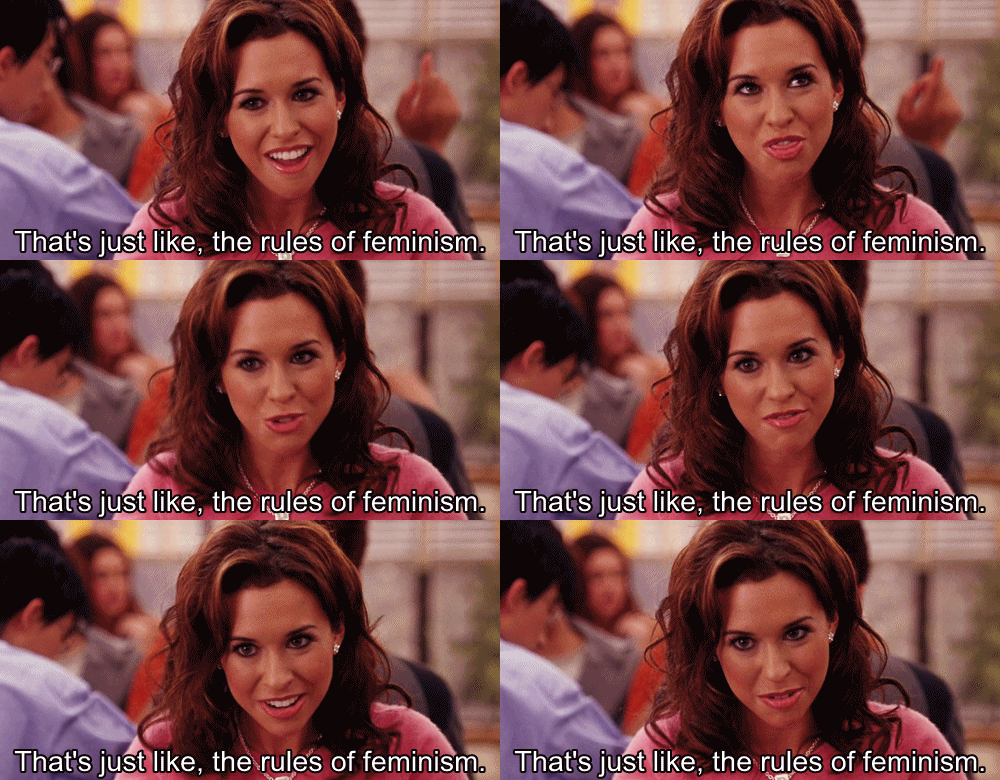
We need to stop this, guys. It is the plot of too many shitty romantic comedies and crappy romance novels. It's insulting to everyone involved to even suggest that another person could be stolen. Someone has to have made a decision somewhere in there. Maybe it was you, deciding to see something totally innocent as someone being "stolen" when you broke up with them and still weren't completely sure if that was a good idea. Maybe the guy's just a douche who'll screw you over when some hot piece of ass walks by. Maybe, as in the context of "Mean Girls" the guy was not in fact aware of your feelings and so could not factor them into his decision making. We can't possibly know, because Taylor's song is so vapid and shallow and grrrr.     

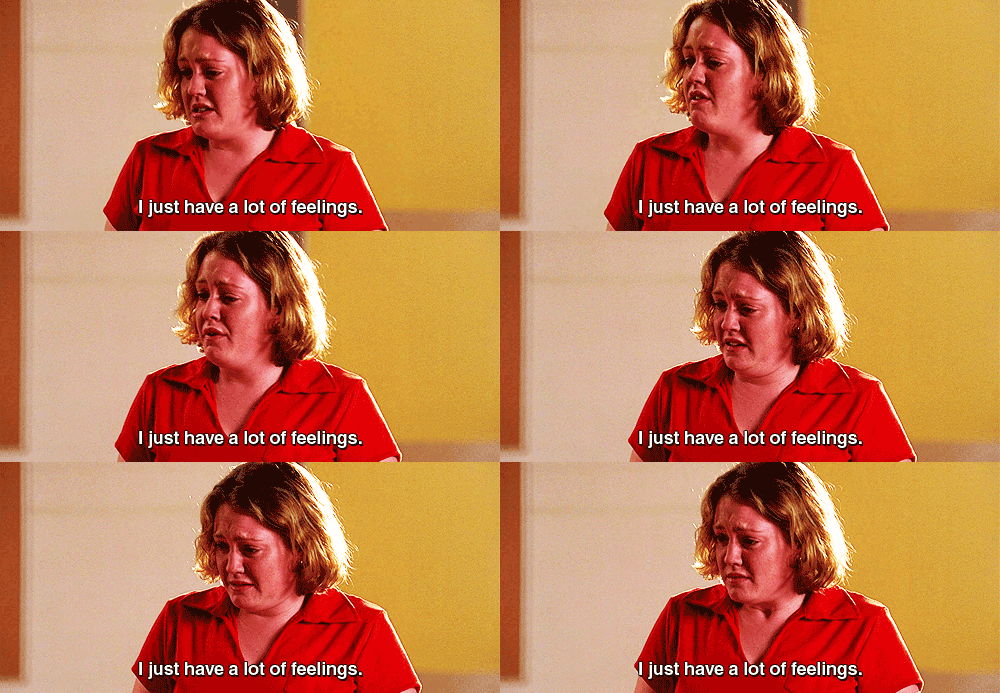
Anyway, I think it's a bad message the song is putting forth. That's it really, I just had a lot of feelings to vent. 
C'mon, you knew this was coming
Embrace the Madness

Wednesday, September 11, 2013

Just a little updatey thing

Hey guys. This is going to be a relatively short installation to this blog (shorter by approximately 2,000 words, damn my rants are lengthy) with a wee welcome to my newer viewers (as my daily view count for the last two days has been at least four times that of the norm, possibly to be attributed to my review of Awoken.) I welcome all Elinsen fans and, on a completely separate note (I have no idea why I would mention it) all fellow fans of team NChick and their exploits. Great minds think alike but fools seldom differ,as the saying goes. You can decide whether or not I'm insulting you. Yay, interactivity!

I'd  also like to make some excuses for myself in advance (though I'm not sure as of yet if they're necessary). This September I began my final year of secondary/high school (I'm seventeen, get with the times). In Ireland we do not have a continual assessment system and so at the end of this year I'll be taking a big ol' exam that will effectively decide what college I can go to, what job I can get (ha, jobs. Do they still exist?) and ultimately decide my future. Considering I'm taking eight higher lever subjects (that's two above the minimum requirement and one above the average) I have a fair bit on my plate for the upcoming nine months. I'm going to try and keep a regular enough schedule blogwise but chances are it will fluctuate. Expect maybe one a week, though this will vary depending on how productive I'm being. And how much I feel like ranting. I have
many things to rant on, don't worry there. Or, y'know, talk about. But mostly ranting.

Now for a little incentive. Over the coming weeks you can expect some entries on (by no means in this order or in fact at all, I'm inconsistent):

1. Taylor Swift
2. More opinions on religion (purely because I have many, many feels on this topic)
3. A Harry Potter themed rant (It's a secret)
4. Maybe a review or two of movies and or plays that are by no means recent
5. Feminism (because the internet is all feminist now, I must voice my thoughts!)

So, um, yeah. Expect some kind of activity from here. I have this thing I do quite frequently (for good or for ill) I like to call "productive procrastination. Basically, when I get bored of the thing I'm meant to be doing, I go off and do something completely different but still sorta productive (like writing a short play. No, really). Therefore this is what I did for most of last year.

I need to catch up just a little. I do very much hope you'll come back here every now and then to read my whatchimocallits and whojimoflips (that sounds like an innuendo. Why does that sound like an innuendo?). You are appreciated here. I'm not like your kids/parents/husband/wife/imaginary friends. I really do understand your pain  .

Embrace the Madness

Tuesday, September 10, 2013

Awoken book review: "YA schlock or thought provoking psychological study?"

Hello readers. So recently twitter (have I mentioned I tweet? Looks like I'm mentioning it again!) has been awash (soon to be contextualised pun intended) with talk and reviews of the newest addition to the overflowing sea (another pun, I swear I'll explain) of young adult paranormal romance novels (I kind of hate that this is considered a subgenre, that it's gotten to that stage. I should stop parenthesising, it's screwing with the flow. Yes, that's another pun, you'll get it in a second.)

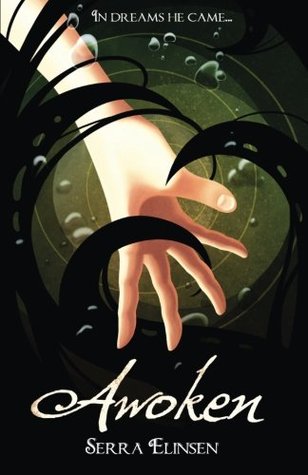
The cover is actually pretty damn cool, if not a little clichéd.
An outdated cliché even for YA at this point.
As a teenage girl, I know these things.


This book is called "Awoken" and is written by debut novelist Serra Elinsen. The concept is, as dubbed by twitter (I'm not kidding about this) "Twilight with Cthulhu". I needed to check this out. So I bought it on kindle a couple days ago and despite being somewhat behind on my schoolwork, burned through it in the next two or three days. It is hilarious. The idea alone grants immediate, tear inducing laughter but the way it's written is just pure gold. In fact, there's a line in it which describes the love interest's voice as "Like a thousand cellos made of gold." I read a review on the amazon page describing is as "the room of young adult literature" (the room being a film that's accumulated a cult following for being so terrible that it's hilarious. It's also incredibly, incredibly quotable). It's gotten fairly mixed reviews all round, some claiming that it's innocent enough, others laughing at the silliness, some are offended while others let out a resounding "meh" (or the occasional "Why does everyone seem to care so much?").

The best illustration of the spectrum on which people have responded to this, um, masterpiece...?

Personally, I was with the "so bad it's freakin' hysterical" crowd... until I got to about chapter nine. Chapter nine was a turning point of sorts for me. In chapter nine (and this is one of the spoilers in this review, so you might want to be wary. I'll try to keep them infrequent but some references do need to be made) Riley (the beautiful boy who is really Cthulu, that's not a spoiler if you have a brain) kidnaps Andi (our protagonist) and takes her to his underground (possibly underwater) cave home thing, R'lyeh, where she begins to see things and also does a total U-turn on her previous hatred of him. After this he takes her to New York for fairly arbitrary plot reasons before bringing her home three days after she first went missing from a beach party (don't ask). It is at this point that "Awoken" seems to diverge distinctly from such predecessors as Twilight and the like, and here is why: Andi suffers actual consequences for her three day absence. Her family and friends are all extremely worried about her, and show as much with genuine concern. I've read a fair few of the Twilight clones (and Twilight itself) and in none of them do the protagonist's everyday associates react so... believably to such disappearance (because impromptu jaunts to far off cities seem common in these books). It seemed a little too accurate.

Honestly, that was the light bulb moment for me. That was when I got it. Hold on to your seats, people, I'm about to go all English class nerd on your asses, because...this book... it's about Stockholm syndrome and the effects of such psychological abuse on the vulnerable mind of a teenage girl. This book is a study, an examination of the mind of someone who's suffering from Stockholm syndrome, seen through the eyes of that very person. And once this thought entered my mind and  was allowed to marinate for a while I was unable to not see it from then on. Because once you see it, it cannot be unseen. It's there like an itch in the back of your mind every time Andi mentally whines about how unworthy of Riley she is or how insignificant she is, how it wouldn't be unusual for him to leave her because he is so much more than she is. This theory of mine kept coming back, confirming itself far too many times for it to be passed off as pure coincidence.

It's what I do. But I think I have a point.


Allow me to elaborate a little for those of you unfamiliar with the term "Stockholm Syndrome". Stockholm syndrome is the phenomenon where a kidnapped person develops sympathy or even feelings as strong as love or devotion towards their captor, despite the captor threatening them, beating them, abusing them sexually and/or torturing them psychologically in the past or even still.

If you've read the book, you'll probably be hearing some little bells ringing right about now. Andi originally feels threatened by Riley and is in fact threatened to a point that could be considered assault when she confronts him on his apparent connection to the deteriorated mental state of one of their classmates. He stalks her, invades her privacy and generally makes her feel uncomfortable for the majority of the first nine chapters. In chapter nine, as I've previously mentioned, he saves her from some would-be rapists (because all girls on their own for three seconds are instant rapist prey) by driving them insane. She then passes out and he kidnaps her. It's only now that we begin to see Andi's change of heart with regards to Riley and she begins to think of him as someone to be desired and looked up to while still acknowledging that he is dangerous. This is quite clearly an indicator that she has fallen subject to the symptoms of Stockholm syndrome. In the Cthulhu cave (which is what it shall forever be known as and you can't stop me) Riley shows Andi some sights that she cannot comprehend (as she has probably been given some kind of hallucinogenic drugs), while she is still tied to a chair. Riley also has a totally-not-a-creepy-stalker hand carved statuette of Andi herself. She finds this in no way off-putting.

Now, I'd like to digress quickly to discuss the way in which this metaphor is carried out and how it made itself clear to me. Firstly, the used of the monster Cthulhu, while originally seeming like a reason to adapt Lovecraft's original writing and for shock value, becomes much more obvious once you consider the connotations; Cthulhu is representative of madness and chaos. This is an unmissable reference to the mental disorder which the protagonist develops over the course of the book, once you looks at it in the right way. Then there's the over the top style of writing and sincerity with which the book carries itself. This is all indicative of the the point that's being made, the over the top, borderline ridiculous nature is to signal to the reader that all is not as it seems. It's really very clever, a study of the disturbed and unstable psyche of a character who is is incredibly mentally confused.

The fact that all the events are viewed through the lense of the first person allow us as readers to experience this disorder firsthand. The way that the protagonist truly does not comprehend why it is that everyone is so worried for her, her desperation when she feels that Riley has left her (this occurs a few times over the course of the narrative), the inner conflict between her devotion and attachment to Riley and her feelings of inadequacy and unworthiness.

There isn't much reason for the inclusion of this
aside from that fact it's cute.
Lookada little Cthulu! Daaaw!
Then we have Riley, the captor. He always speaks in a formal, anachronistic manner, perhaps the protagonist's subconscious attempt to reveal that he is, in reality, a man much older than she is. That would explain why she always describes him as this idyllic Godlike figure- it could be a coping mechanism for her young mind to cope with being sexually violated by one so much older.

While we're going into double meanings, this book can also be seen on parallel with books such as "50 Shades of Grey" (which, for the record, I have only read vicariously through livetweets, the wikipedia summary and the "50shadesofwhy" tumblr page, which I highly recommend) where the male lead is also forceful to the point of abusive. Particularly in the New York scenes where Riley is insisting she eat and where he buys her gifts she isn't comfortable accepting, which feel lifted almost exactly from 50SoG, perhaps making a comment on the similar abusive threads. However, where 50SoG plays its awful contrived (and boring) premise fairly straight, Awoken is so over the top that it reeks of social commentary to be analysed. In fact, the inclusion of the "Plaza Hotel" (which I'm pretty sure no longer exists) where the pair stay while on their visit might suggest that the entire outing may have been a figment of Andi's drug addled mind. That, or it's just really badly written with very little research done or thought put into how actual people behave or interact. I find it rather difficult to imagine that so many similarities could be visible without a huge amount of research and carefully placed metaphor and symbolism on the part of the author.

Overall, the plot isn't important, it's simply a vessel for the ideas and messages hidden beneath layer after layer of absurdism and overused vocabulary. This book is an intriguing and thought provoking study of the mind of an abuse victim and also a social study on the romanticism of abuse in today's literature. I must say, I'm curious as to the background of this writer. Someone who could come up with such an intricate concept and such a subtle message that so many have passed it over as just another piece of shit YA novel must have some kind of background in psychology or sociology... excuse me readers, I think I'm going to research this woman a little further, so as to comprehend the mind behind this ingenious work.

............

Oh.

............

Well this is....

My most humble apologies, readers, but it seems I've far, far overestimated this book. Having done a little more research into the life of Serra Elinsen I can quite definitively confirm that none of the aforementioned theories have any founding. Put in the nicest possibly way, this woman is an idiot. I'd daresay that the blog you have just read took more mental exertion than Mrs. Elinsen has the capacity for. I'm so sorry readers, this is really rather embarrassing.

Damn you, Serra Elinsen.
I had such high hopes for you.
You see, Mrs. Elinsen is, from what I can gather, a small minded mother of five from some small town in the middle of the US. She belongs to a minuscule faction of the Christian faith and appears to be rather religious and involved in this church. Quite frankly, it would take someone, no, a team of people infinitely more intelligent than this woman to have written this book for any of the deeper meanings I have extrapolated to have any significance. I take it all back, readers. This book is hilariously bad, but it is bad and nothing more.

Embrace the Madness (or in this case, embrace Cthulhu?)